How Often Should a Beginner Exercise?
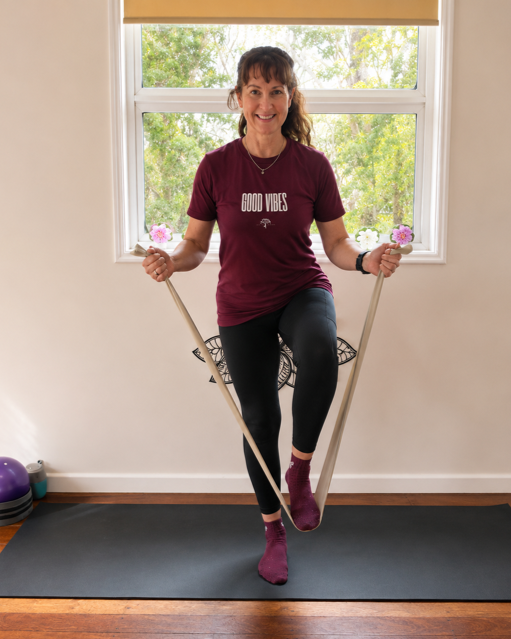
Jodie teaching a Pilates class with resistance band to strengthen arms, balance and legs!
When you’re new to exercise — or returning after a long break — one of the first questions you might ask is:
How many days a week should I exercise?
It’s easy to think that getting fit means exercising hard every day.
It doesn’t.
Especially when you’re beginning, I believe it’s much more important to create a routine you can enjoy and maintain than to do too much too soon.
You Don’t Have to Exercise Every Day
Your body needs both movement and recovery.
If you’ve been relatively inactive, suddenly launching into intense workouts every day can leave you exhausted, sore and much less enthusiastic about exercising again!
Start with what feels manageable.
For some people, that might mean two or three structured exercise sessions a week, combined with gentle everyday movement such as walking, gardening or stretching.
As your fitness and confidence improve, you can gradually do more.
Think About Variety, Not Just Frequency
Rather than only asking “How many workouts should I do?”, I encourage people to think about what types of movement they’re getting during the week.
A balanced routine can include:
Strength – Pilates, resistance bands, hand weights or body-weight exercises
Cardio – walking, swimming, cycling, dancing or low-impact aerobics
Mobility & flexibility – Yoga, stretching and gentle movement
Balance – simple balance exercises
Recovery – gentler movement, relaxation and rest
You don’t need a separate workout for every one of these.
A well-designed class can incorporate several elements at once.
What About Exercise After 50?
As we get older, I think variety becomes even more valuable.
We want to maintain strength, but we also want to stay mobile.
We want cardiovascular fitness, but balance and coordination matter too.
And we shouldn’t underestimate the importance of recovery.
This is one reason I don’t believe there is one perfect type of exercise after 50.
A combination usually makes much more sense.
A Beginner’s Week Could Be Simple
You don’t need an elaborate exercise programme.
For example, you might do a Pilates class for strength, enjoy a Yoga class for mobility and relaxation, and walk on some of the days in between.
Another person may prefer two Pilates sessions, some gardening and a low-impact cardio class.
Both can be perfectly good routines.
The aim is to find a pattern that fits your body and your life.
How Do You Know If You’re Doing Too Much?
More isn’t always better.
Pay attention to how you feel after exercise and over the following days.
Normal muscle tiredness when you’re doing something new is one thing. Feeling constantly exhausted, unusually sore or dreading your next workout may be a sign that you need to reduce the intensity or give yourself more recovery time.
If you have an injury, medical condition or concerns about beginning exercise, it’s sensible to speak with an appropriate health professional about what’s suitable for you.
Consistency Matters More Than Perfection
I’d much rather see a beginner move regularly two or three times every week for months than exercise every day for two weeks and then stop altogether.
Your routine also doesn’t have to look exactly the same every week.
Life happens.
Some weeks you’ll have more energy and time. Other weeks you may need to do less.
That doesn’t mean you’ve failed.
Simply start again.
Find Movement You Look Forward To
This may be the most important part.
Exercise becomes much easier to maintain when you find something you actually enjoy.
Maybe that’s Pilates.
Maybe it’s Yoga.
Maybe you love walking, swimming, gardening or dancing to music.
Or perhaps, like many of my members, you enjoy a mixture.
After more than 20 years of teaching, I’ve seen that people are much more likely to keep moving when exercise becomes something they look forward to rather than something they feel guilty about not doing.
Ready to Begin?
You don’t need to exercise every day and you don’t need to be fit before you start.
Begin with a manageable amount, include different types of movement and give your body time to adapt.
Kevala Health offers beginner-friendly Yoga, Pilates and fitness classes, live online across Australia and in person on Russell Island.
Live online: Try your first 7 days FREE.
Russell Island: Try your first class FREE.
Continue Your Healthy Ageing Journey: