Can You Start Pilates after 60?
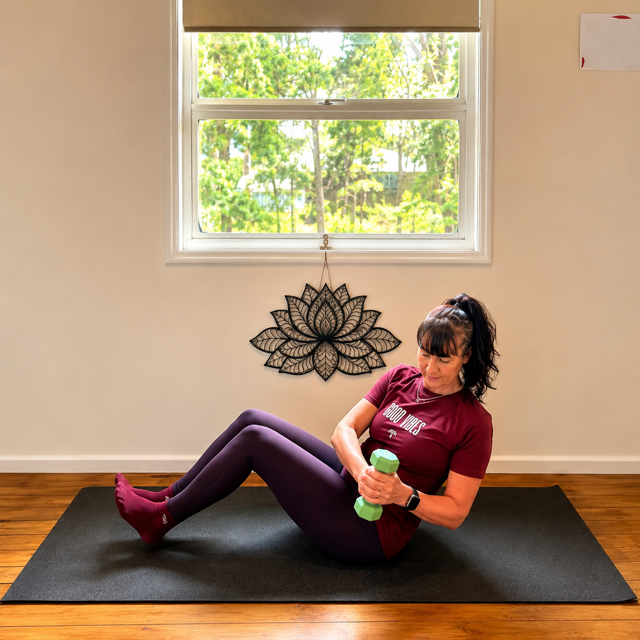
Jodie teaching the seated Russian twist with weights or no weights in Pilates class to strengthen the core.
Starting Pilates After 60: A Beginner’s Guide
If you’ve never tried Pilates before, starting in your 60s can feel a little daunting.
You might wonder:
Am I too old to start Pilates?
What if I’m not flexible?
What if I haven’t exercised for years?
Will I be able to keep up?
The good news is that you absolutely can start Pilates at 60 — and you don’t need previous experience to begin.
Pilates can be adapted to different fitness levels and abilities, making it a wonderful form of movement for people who want to improve their strength, mobility, balance, and body awareness as they get older.
The key is starting at an appropriate level and progressing gradually.
Are You Too Old to Start Pilates?
No.
I’ve taught many people who came to Pilates later in life, including complete beginners.
One of the biggest misconceptions I hear is that you need to get fitter or more flexible before joining a class.
You don’t.
Pilates isn’t about being able to perform the most difficult exercise in the room. It’s about learning how your body moves and gradually developing more strength, control, and confidence.
At 60, 70, and beyond, you can still learn new ways of moving and become stronger with regular practice.
What Are the Benefits of Pilates After 60?
Pilates combines controlled movement with breathing and body awareness.
Depending on the exercises and how they’re adapted, regular Pilates practice can help support:
muscle strength
core strength
mobility and flexibility
balance and coordination
posture and body awareness
confidence with everyday movement
These become particularly valuable as we get older because staying active isn’t simply about fitness.
It’s about continuing to do the everyday things we enjoy.
What If You Haven’t Exercised for Years?
This is one of the most common concerns beginners have.
You may feel as though everyone else will know what they’re doing or that you’ll be expected to keep up.
A good beginner-friendly Pilates class shouldn’t feel like that.
You can start with simple exercises, take breaks when you need them, and use modifications until you become more comfortable with the movements.
You may also use a chair or other support for some exercises if appropriate.
Starting gently is still starting.
And every class gives you another opportunity to learn.
Do You Need to Be Flexible to Do Pilates?
Absolutely not.
Being inflexible is often one of the reasons people can benefit from adding more regular movement into their lives.
Pilates isn’t a flexibility competition.
Your range of movement may be different from the person beside you — and that’s perfectly fine.
With regular practice, you may gradually notice everyday movements beginning to feel easier and your mobility improving.
Is Pilates Good for Strength After 60?
Pilates can be an excellent way to work on strength because many exercises ask your muscles to control and support your body through movement.
As you progress, resistance can also be added using equipment such as:
resistance bands
Pilates balls
light hand weights
This allows exercises to be gradually progressed as your strength and confidence improve.
If maintaining strength as you age is one of your goals, you might also enjoy:
What Type of Pilates Should a Beginner Start With?
There isn’t one perfect Pilates class for everyone.
Look for a class where the teacher is comfortable working with beginners and offers different exercise options.
At Kevala Health, I teach several styles of Pilates, including traditional Pilates movements as well as classes using balls, resistance bands, and light hand weights.
If you’re completely new, my Pilates for Beginners page is a good place to start.
The aim isn’t to master everything in your first class.
Learn the basics first. Then gradually build from there.
Can You Do Pilates at Home After 60?
Yes.
For many people, exercising at home can actually make starting Pilates feel less intimidating.
You don’t have to travel to a studio, worry about what anyone else is doing, or feel self-conscious about modifying an exercise.
With a live online class, you can still follow a teacher in real time while exercising in your own space.
At Kevala Health, my classes can be joined live online from anywhere in Australia, so you can practise from home while still being part of the class.
How Often Should a Beginner Do Pilates After 60?
You don’t need to do Pilates every day to benefit from it.
If you’re completely new, even starting with one or two classes each week can help you become familiar with the movements.
As your body adapts, you may decide to practise more frequently or combine Pilates with walking, yoga, cardio, or other strengthening activities.
The most important thing is finding a routine you can realistically maintain.
Consistency beats doing too much and giving up.
What If You Have Bad Knees or Back Problem or an Injury?
This is where individual circumstances matter.
Pilates exercises can often be modified, but that doesn’t mean every exercise is appropriate for every person.
If you have an injury, significant pain, osteoporosis, a medical condition, or you’ve recently had surgery, it’s sensible to speak with your doctor, physiotherapist, or other appropriate health professional before beginning a new exercise program.
And always let your Pilates teacher know about anything that may affect how you exercise.
Pain isn’t something you should simply push through.
Your First Pilates Class Doesn’t Have to Be Perfect
You might wobble.
You might forget which leg you’re supposed to be moving.
You might discover muscles you didn’t know you had!
That’s all part of learning.
After more than 20 years of teaching, one thing I continue to encourage is to work with the body you have today.
Some days you’ll feel strong and energetic.
Other days you’ll need gentler options.
Both are okay.
Ready to Try Pilates?
If you’ve been thinking about Pilates but wondering whether you’re too old to start, don’t let your age be the thing that stops you.
You don’t need to be strong, flexible, or experienced before your first class.
You simply need somewhere appropriate to begin.
At Kevala Health, my classes are designed to be welcoming and adaptable, particularly for beginners and people over 50.
You can join me locally on Russell Island or practice live online from home anywhere in Australia.
If you’d like to try the online classes first, start with my 7-day free live online trial.
You don’t have to be good at Pilates to start Pilates.
You start Pilates to get better at Pilates — and to help your body keep moving well for the years ahead.
Beginner-Friendly Pilates Classes at Kevala Health
At Kevala Health, you don’t have to fit into just one style of Pilates. I teach several beginner-friendly classes so you can find the type of movement you enjoy and gradually build your confidence.
My weekly Pilates classes include:
Pilates with Balls & Bands – using small Pilates balls and resistance bands to work on strength, mobility, and control.
Pilates with Hand Weights – combining Pilates movements with light weights for an extra strength-building challenge.
Different options and modifications are offered throughout my classes, so you don’t need to do everything exactly the same way as someone else.
You can join me in person on Russell Island or live online from home, making it easier to fit Pilates into your week wherever you are.