Why Am I Losing Strength After 50?
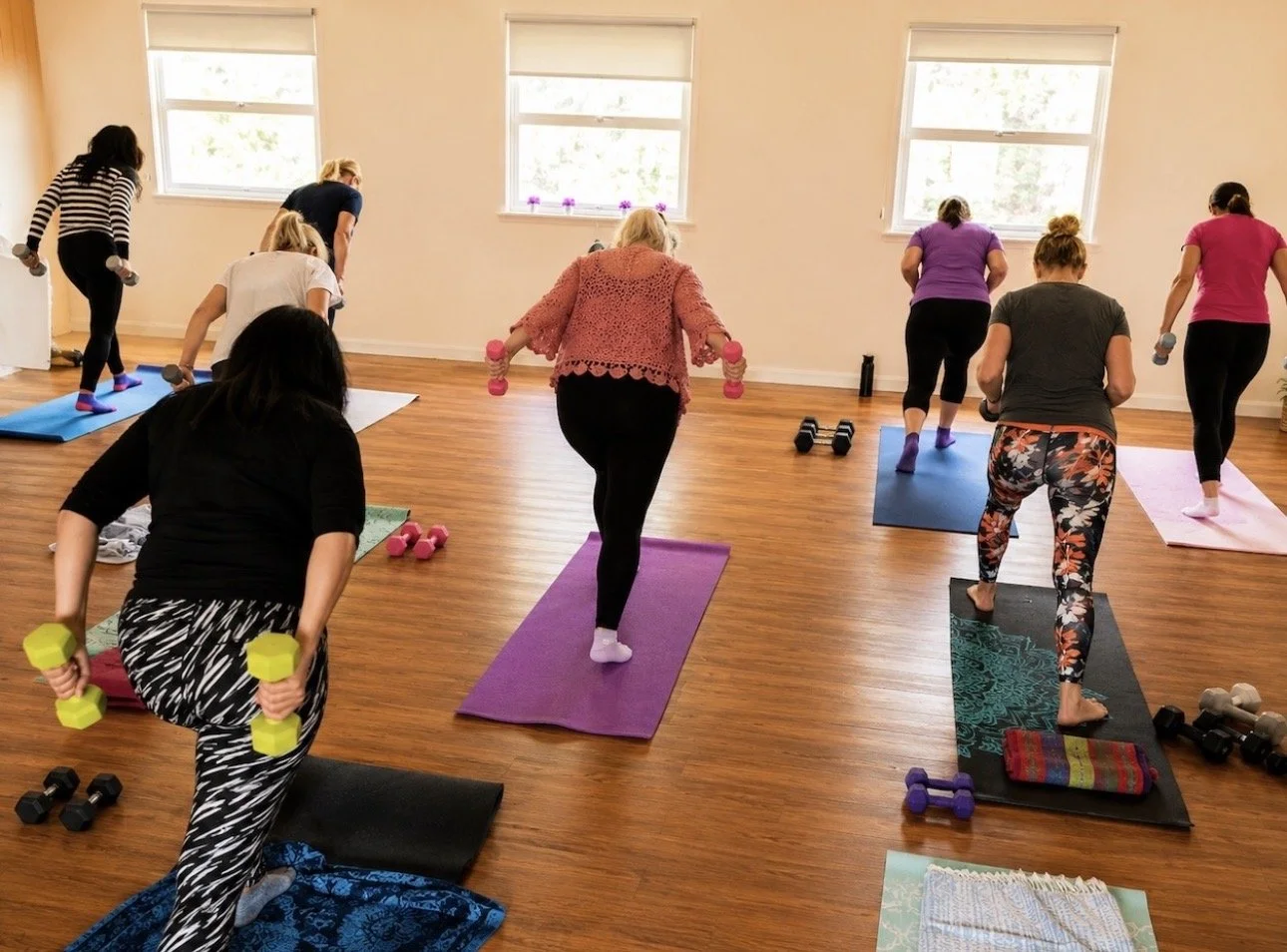
Kevala Health’s Pilates with weights class. Available on live online you can do at home.
How to Build Your Strength Back Safely
If you’ve reached your 50s or beyond and noticed that everyday things don’t feel quite as easy as they once did, you’re certainly not alone.
Perhaps carrying the shopping feels heavier. Getting up from the floor takes a little more effort. Your legs tire more quickly, or exercises that once felt easy suddenly feel challenging.
One reason for this can be the gradual loss of muscle and strength that naturally occurs as we get older.
The encouraging part? It’s never too late to work on getting stronger.
You don’t need to lift extremely heavy weights or push your body through exhausting workouts. Regular, appropriately challenging strength and resistance exercise can help you maintain muscle, improve everyday function, and stay active as you age.
Why Do We Lose Strength After 50?
Our bodies naturally change as we get older, and one of those changes can be a gradual reduction in muscle mass and strength.
This age-related loss of muscle is often called sarcopenia.
Hormonal changes, becoming less active, illness or injury, inadequate nutrition, and simply spending more time sitting can all contribute.
For women, the changes around menopause can also affect muscle and bone health, making regular strength-building movement particularly valuable.
Rather than seeing getting weaker as something you simply have to accept with age, think of strength as something you can continue to practise.
Signs You May Need to Work on Your Strength
Changes can happen gradually, so you may notice them first during everyday activities.
You might find:
Getting up from a chair feels harder
Climbing stairs takes more effort
Carrying shopping feels heavier
Your legs tire more quickly
Getting down to and up from the floor is more difficult
Your balance or confidence has changed
You avoid activities you used to enjoy because they feel harder
These can have many causes, so persistent or sudden changes should always be discussed with an appropriate health professional.
But for many people, gradually adding more strengthening activity into the week can be an important part of healthy ageing.
How Can You Build Strength After 50?
You don’t need complicated equipment.
Strength improves when your muscles regularly work against some form of resistance.
That resistance might come from:
your own body weight
resistance bands
light hand weights
Pilates balls
household objects
progressively more challenging movements
Exercises such as squats to a chair, wall push-ups, bridges, calf raises, resistance-band exercises, and appropriately modified Pilates movements can all contribute to building strength.
The important part is finding a level that challenges you without sacrificing good technique or causing pain.
Pilates Can Be a Great Place to Start
Pilates is one of my favourite ways to introduce beginners to strengthening exercise because it combines strength with body awareness, control, posture, balance, and mobility.
You don’t have to already be strong or flexible before beginning Pilates.
That’s what the practice is there to help you develop.
A beginner-friendly class can teach you how to move with more control and gradually progress exercises as your confidence and strength improve.
You may also like my Pilates for Strength & Mobility resources, where I share more ways Pilates can support an active lifestyle as we get older.
Don’t Forget Your Legs
When people think about strength training, they often picture arm exercises and weights.
But maintaining strength through your legs, hips, and glutes is particularly useful for everyday life.
Think about how often you use these muscles to:
Stand up from a chair
Climb stairs
Walk uphill
Get up from the floor
Carry things
Maintain your balance
Simple lower-body strengthening exercises can therefore have a very practical purpose.
If you’re looking for somewhere to begin, you might also enjoy my Best Full Body Workout for Beginners, which includes accessible exercises you can practise at home.
How Often Should You Strength Train After 50?
You don’t have to do a long strength workout every day.
Australian physical activity guidelines recommend that adults include muscle-strengthening activities on at least two days each week.
If you’re completely new to exercise, starting gradually is perfectly reasonable.
Consistency matters more than trying to do too much too soon.
Your body also needs time to recover, particularly when you’re introducing new exercises or increasing resistance.
What If You Haven’t Exercised for Years?
Start where you are today — not where you think you should be.
Your first goal might simply be learning a few movements safely.
You can use a chair for support, choose lighter resistance, reduce the range of movement, or take more breaks.
Over time, an exercise that initially feels challenging may begin to feel easier. That’s a lovely sign that your body is adapting.
You can then gradually progress by adding a little more resistance, increasing repetitions, or trying a slightly more challenging variation.
Strength Is About More Than Muscles
For me, getting stronger after 50 isn’t about trying to look or exercise, like we did at 25.
It’s about helping our bodies continue doing the things that matter to us.
Walking.
Travelling.
Gardening.
Playing with grandchildren.
Getting up from the floor.
Carrying our own shopping.
Feeling confident enough to keep trying new things.
That is what healthy ageing means to me — maintaining the strength, mobility, and confidence to keep participating in life.
Ready to Start Building Strength?
If you’re a beginner, you don’t have to figure everything out on your own.
At Kevala Health, my Pilates, yoga, and fitness classes are designed to be welcoming and adaptable, particularly for beginners and people over 50.
You can join me locally on Russell Island or take part in live online classes from home.
If you’d like to see whether the classes suit you, you can start with my 7-day free live online trial.
Start gently, stay consistent, and give your body time.
You may be surprised by just how much stronger you can become.
Try Pilates With Weights at Home
If you’d like to add a little more resistance to your Pilates practice, my Pilates with Weights classes combine traditional Pilates-style movements with light hand weights to help build strength throughout the body.
You can join me live online from home on Wednesdays and Saturdays, making it an easy way to include regular strength-building movement in your week.
The classes are beginner-friendly, with different options offered so you can work at a level that feels right for you.
And if you’re new to my online classes, you can try them with my 7-day free live online trial.
Continue Your Healthy Ageing Journey by reading our Healthy Ageing Hub articles.