Can You Start Yoga if Have Lower Back Pain?
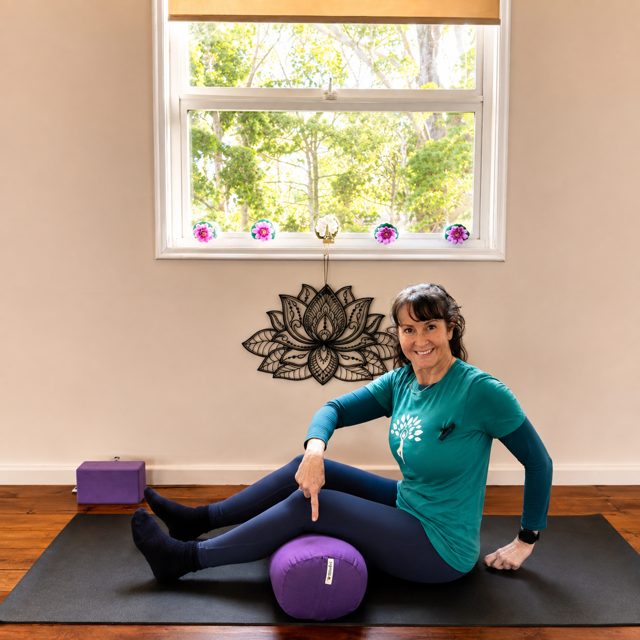
Jodie teaching a seated yoga pose using a bolster under legs to support lower back!
Beginner Yoga for Lower Back Pain | Live Online
If you’ve been avoiding yoga because of lower back discomfort, you’re not alone. Many beginners worry that yoga might make their back pain worse. The good news is that the right type of yoga, with the right modifications, can often help you move more comfortably.
You’re Not Alone
Lower back discomfort is one of the most common reasons people stop exercising or avoid trying something new.
Whether your back feels stiff after sitting, aches after gardening or becomes sore after a busy day, it’s understandable to feel cautious.
The important thing to remember is this:
Yoga should never be about pushing through pain.
It should help you move with greater awareness and confidence.
My Approach to Teaching
One of the first things I tell new students is:
Your yoga practice should fit your body—not the other way around.
Every person arrives with a different history.
Some have old injuries.
Some have arthritis.
Some simply have tight muscles from years of sitting.
That’s why I always encourage modifications and remind students that resting is perfectly okay.
Why Lower Back Pain Happens
There are many reasons people experience lower back discomfort, including:
Sitting for long periods.
Weak core muscles.
Tight hips.
Tight hamstrings.
Poor posture.
Previous injuries.
Everyday wear and tear.
Because there are many possible causes, it’s important to seek medical advice if your pain is severe, persistent, follows an injury, or is accompanied by symptoms such as numbness, weakness or changes in bladder or bowel control.
For many people with general stiffness or mild discomfort, gentle movement can be a helpful part of staying active.
Helpful Modifications for Beginners
Small adjustments can make yoga much more comfortable.
You might try:
Using a bolster or cushion for support.
Placing a folded blanket under your knees.
Bending your knees during forward folds instead of keeping your legs straight.
Using yoga blocks to bring the floor closer.
Choosing a smaller range of movement.
Resting whenever your body asks you to.
Remember…
There is no perfect yoga pose.
There is only the version that feels right for your body.
Gentle Poses That May Feel Comfortable
Many beginners enjoy gentle movements such as:
Cat-Cow
Pelvic tilts
Supported Child’s Pose
Reclined knee hugs
Gentle spinal twists (only within a comfortable range)
Relaxation with a bolster under the knees
Move slowly, breathe steadily and never force a stretch.
Build Strength as Well as Flexibility
Many people think stretching alone will solve back discomfort.
In reality, strength is just as important.
That’s one reason I encourage both yoga and Pilates.
Yoga improves:
Mobility.
Body awareness.
Flexibility.
Pilates helps strengthen:
Core muscles.
Glutes.
Hips.
Postural muscles.
Together they can support healthier movement.
Listen to Your Body
One of yoga’s greatest lessons is learning the difference between challenge and pain.
A gentle stretch can feel good.
Sharp, increasing or radiating pain is a sign to stop.
Always respect your body’s signals.
Progress happens through patience—not force.
It’s Okay to Move Differently
One of the biggest misconceptions about yoga is believing everyone has to do the same pose.
That’s simply not true.
Using props, taking breaks and choosing modifications are all part of a smart and sustainable yoga practice.
Your practice is about feeling better—not keeping up with anyone else.
Final Thoughts
Lower back discomfort doesn’t automatically mean yoga isn’t for you.
With the right guidance, thoughtful modifications and a gentle approach, many people discover that yoga helps them move with greater confidence and less stiffness.
Start slowly.
Be patient with yourself.
Celebrate small improvements.
Healthy ageing isn’t about moving perfectly.
It’s about continuing to move in ways that support your body and your wellbeing.
Continue Your Yoga Journey
You may also enjoy:
Or join one of my live online beginner-friendly yoga classes, where every movement can be adapted to suit your body, your experience and your comfort level.