
How to Calm a Busy Mind Before Bed
Calm a Busy Mind Before Bed After 50
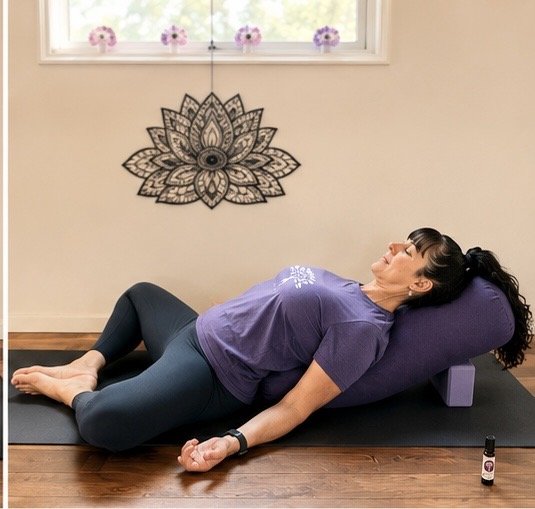
Jodie teaching the supported recline butterfly yoga pose to help students deeply release and relax.
Does your body feel tired at night, but the moment your head hits the pillow, your mind suddenly becomes busy?
You might start thinking about what happened during the day, what you need to do tomorrow, family, work, or things you simply can’t change.
A busy mind at bedtime can make it difficult to relax and drift off to sleep. Stress and worry can also become connected with sleep itself — the more we worry about not sleeping, the harder it can sometimes feel to switch off.
The good news is that simple calming habits can help create a gentler transition between your busy day and bedtime.
Why Does My Mind Get So Busy at Night?
During the day, we often have plenty to distract us. We’re working, exercising, talking to people, looking after others, or simply getting things done.
Then everything becomes quiet.
Suddenly, there’s space for all those thoughts we didn’t have time to process earlier.
You might find yourself:
replaying conversations
thinking about tomorrow
making mental to-do lists
worrying about family or finances
thinking about things outside your control
worrying about whether you’re going to sleep
This doesn’t necessarily mean anything is wrong. But if it happens regularly, creating a calming evening routine may help your mind recognise that the day is coming to an end.
1. Create a Gentle Wind-Down Routine
Try not to go directly from a busy evening into bed.
Give yourself a little transition time.
Your wind-down routine doesn’t need to be complicated. It might include dimming the lights, having a warm shower, listening to relaxing music, reading, or spending a few quiet minutes breathing.
Doing something similar each evening can become a gentle signal that it’s time to slow down.
2. Put Tomorrow’s Thoughts on Paper
If your mind becomes filled with things you need to remember, try writing them down before you go to bed.
Keep a notebook nearby and make a simple list for tomorrow.
You can also write down something that is worrying you and remind yourself:
“I don’t need to solve this tonight.”
Sometimes simply knowing that a thought has been acknowledged can make it easier to let it go for now.
3. Try Slow, Relaxed Breathing
Your breath is one of the simplest tools you can use when you’re feeling tense or mentally busy.
Sit or lie somewhere comfortable.
Allow your shoulders to soften.
Breathe in slowly through your nose, then breathe out gently and comfortably.
Rather than trying to breathe perfectly, simply notice the sensation of your breath.
If your thoughts wander — and they probably will — gently return your attention to your breathing.
Even a few quiet minutes can become part of your bedtime ritual.
4. Relax Your Body as Well as Your Mind
Sometimes we don’t realise how much tension we’re holding until we become still.
Notice your:
jaw
shoulders
hands
stomach
hips
legs
Rather than forcing yourself to relax, simply notice where you’re holding tension and see if you can soften that area a little.
You could also try a few gentle stretches, restorative yoga, or a short meditation before bed.
5. Give Yourself a Break From Screens
Scrolling through your phone can feel relaxing, but it can keep your mind engaged when you’re trying to wind down.
Try creating a little screen-free space before bed.
You don’t have to make it another strict rule. Even replacing some scrolling time with reading, breathing, gentle stretching, or listening to quiet music can help create a calmer end to your day.
6. Try Mindfulness Instead of Trying to Stop Your Thoughts
One of the biggest misconceptions about meditation is that you need to completely empty your mind.
You don’t.
Thoughts will come and go.
Mindfulness is more about noticing those thoughts without needing to follow every one of them.
If a thought appears, acknowledge it and gently bring your attention back to something simple — your breathing, the feeling of your body resting, or the sounds around you.
Over time, this can help change the way you respond to a busy mind.
7. Don’t Put Pressure on Yourself to Sleep
Have you ever looked at the clock and thought:
“If I fall asleep right now, I’ll still get six hours…”
Then suddenly you’re even more awake?
Trying too hard to sleep can create more tension.
Instead of demanding that your body fall asleep, focus on creating the conditions for rest.
You can’t force sleep, but you can give yourself permission to slow down.
A Simple 5-Minute Bedtime Reset for Sleep
Try this tonight:
Minute 1: Get comfortable and allow your body to become still.
Minute 2: Notice where you’re holding tension and gently soften your jaw and shoulders.
Minute 3: Bring your attention to your natural breathing.
Minute 4: If thoughts appear, acknowledge them without trying to solve them.
Minute 5: Quietly remind yourself: “The day is finished. I can come back to this tomorrow.”
Simple practices often work best when they become familiar rather than something we only try on particularly stressful nights.
Gentle Movement Can Be Part of Your Wind-Down Too
Yoga, mindful movement, and breathing can provide an opportunity to slow down and reconnect with your body after a busy day.
At Kevala Health, my classes are designed to be welcoming and beginner-friendly, with an emphasis on moving at your own pace.
If relaxation and slowing down are particularly important to you, you may enjoy Yin Yoga & Meditation, Breathe & Balance, or Restorative Yoga Flow.
You can also explore more articles in my Mind & Wellbeing section for simple ways to support relaxation, stress management, and everyday wellbeing. How to meditate for over 50!
Try Kevala Health Online Free for 7 Days
If you’d like to experience gentle yoga, Pilates, breathing, and relaxation from home, you can try my live online classes free for 7 days.
There’s no need to be flexible, experienced, or super fit. You can start at your own pace and discover which classes feel right for you.
Start Your 7-day Free Trial Now
A Final Thought
A busy mind doesn’t always need another solution.
Sometimes it needs less stimulation, a slower breath, a softer body, and permission to leave tomorrow until tomorrow.
Creating a peaceful bedtime routine isn’t about doing everything perfectly. Choose one or two simple practices that feel good to you and give them time to become part of your evening.
And remember — rest is valuable, even before sleep arrives.
This article provides general well-being information and is not a substitute for individual medical advice. If sleep difficulties are persistent, worsening, or affecting your daily life, speak with your GP or another qualified health professional.