Leg Strength Helps You Stay Independent
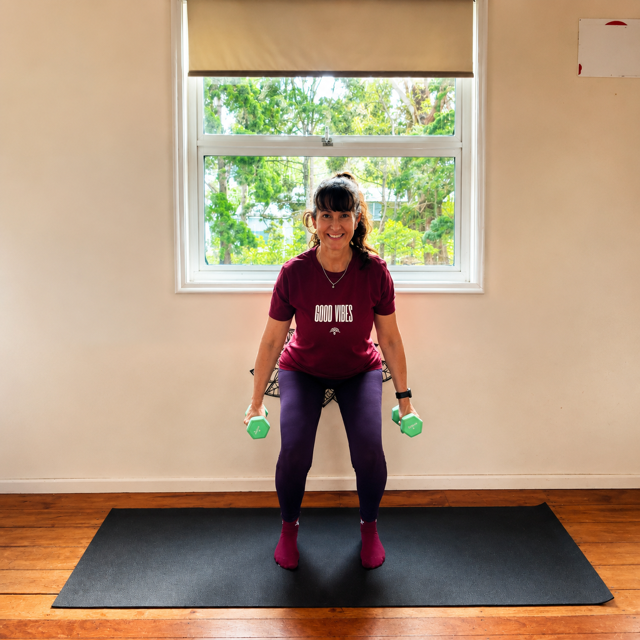
Jodie holding weights in a squat for stronger legs
Leg Strength Helps You Stay Independent Over 50
Have you ever noticed that simple everyday tasks become a little harder as the years go by?
Standing up from a chair.
Walking upstairs.
Carrying groceries.
Getting in and out of the car.
These movements all rely on one important thing—strong legs.
As we get older, we naturally lose muscle strength if we don’t continue to use and challenge our muscles. This gradual loss of muscle, known as age-related muscle loss, is a normal part of ageing, but regular strength-based exercise can help slow the process.
The wonderful news is that it’s never too late to build stronger legs.
Why Strong Legs Matter
Strong legs help you enjoy everyday life with greater confidence.
They support you when you:
Walk around your neighbourhood.
Climb stairs.
Stand for longer periods.
Carry shopping.
Get up from the floor.
Play with children or grandchildren.
Enjoy holidays and travel.
Maintain your independence.
Every step you take depends on strong muscles working together.
Leg Strength and Balance
Your legs are your foundation.
The stronger they become, the more stable you often feel.
Good leg strength supports:
Better balance.
Quicker reactions.
Improved coordination.
Reduced risk of falls.
More confidence when walking on uneven ground.
Strength and balance work hand in hand.
Pilates Builds Functional Strength
One of the things I love most about Pilates is that it strengthens your body for real life.
Rather than simply lifting heavy weights, Pilates teaches your muscles to work together.
This improves:
Stability.
Coordination.
Mobility.
Posture.
Core strength.
Balance.
These improvements can make everyday activities feel easier and more comfortable.
Simple Leg-Strengthening Exercises
You don’t need a gym to begin building stronger legs.
Here are a few gentle exercises to try.
Sit-to-Stand
Sit on a sturdy chair.
Stand up slowly without using your hands if possible.
Lower yourself back down with control.
This simple exercise strengthens the muscles you use every day.
Supported Squats
Hold onto a bench or chair for support if needed.
Bend your knees slightly before returning to standing.
Move slowly and comfortably.
Heel Raises
Holding onto a chair, slowly rise onto your toes before lowering again.
This helps strengthen your calves while improving balance.
Step-Ups
Using a low step, slowly step up and down.
Take your time and focus on good control.
Movement Builds Confidence
Many people become less active because they’re worried about falling or hurting themselves.
Unfortunately, avoiding movement often leads to weaker muscles.
The stronger your legs become, the more confident you usually feel doing everyday activities.
Confidence encourages movement, and movement helps maintain strength.
It’s a positive cycle.
Consistency Is the Secret
You don’t need to spend hours exercising.
A few Pilates sessions each week, regular walking and gentle strength exercises can make a remarkable difference over time.
Small improvements add up.
Final Thoughts
Healthy ageing isn’t about being the fastest or strongest person in the room.
It’s about having the strength to continue living the life you enjoy.
Strong legs help you stay active, independent and confident.
Strong leg muscles also place healthy demands on your bones, helping support bone health as you age.
Every step you take today is an investment in your future wellbeing.
One thing I’ve noticed over the years is that students often arrive wanting stronger legs, but they leave with something even more valuable - confidence. They start trusting their bodies again and feel more capable doing everyday tasks.
At Kevala Health, my Pilates classes are designed especially for beginners and adults over 50. Through gentle, supportive movement, you’ll gradually build strength, improve mobility and enjoy moving with confidence every day.
Strength and balance work hand in hand!
Continue Your Wellness Journey
🧘 Join with our 7-day free trial
💪 Explore Beginner Pilates Classes
🌿 Visit the Healthy Ageing Hub