Breathing Exercises for Stress Relief
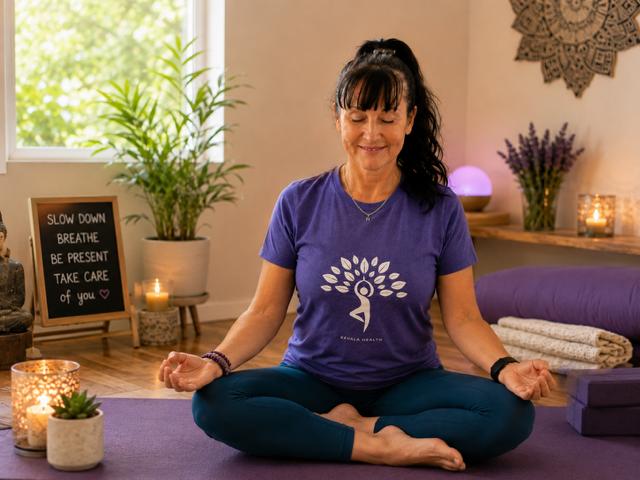
Breathing meditation to relax and feel calmer
Breathing Exercises to Feel Calmer
Have you ever noticed what happens to your breathing when you’re stressed?
You might start breathing more quickly, take shorter breaths, or even find yourself holding your breath without realising it.
When life feels busy or overwhelming, taking a few minutes to slow down and notice your breathing can be a simple way to pause, reconnect with your body, and create a little more calm.
And the lovely thing about breathing exercises is that you don’t need any equipment, special clothing, or previous experience.
You can practise them almost anywhere.
How Can Breathing Help With Stress?
Breathing happens automatically, so most of the time we don’t think about it.
But our breathing can change depending on how we’re feeling.
When we’re stressed or anxious, breathing may become quicker or shallower. When we’re relaxed, it generally becomes slower and more comfortable.
Relaxation breathing techniques intentionally slow the breath and can help produce a calming response in the body.
You don’t need to take enormous breaths or force your breathing.
For beginners, slow, comfortable, and relaxed is enough.
1. Start by Simply Noticing Your Breath
Before trying to control your breathing, spend a minute simply noticing it.
Sit somewhere comfortable and allow your shoulders to relax.
Notice:
Is your breathing fast or slow?
Does it feel shallow or relaxed?
Are your shoulders lifting as you breathe?
Are you holding tension in your jaw or chest?
Don’t judge what you find.
Just notice.
Sometimes, bringing awareness to our breathing is enough to help us slow down.
2. Try a Longer, Gentler Exhale
This is one of my favourite simple breathing practices when you want to settle.
Sit comfortably and breathe in gently through your nose.
Then allow your exhale to be slightly slower and longer.
For example, you might comfortably breathe in for a count of 4 and breathe out for a count of 6.
Don’t worry about getting the numbers perfect.
Repeat for several comfortable breaths.
If counting makes you feel more stressed, forget the numbers and simply allow your exhale to feel soft and unhurried.
3. Belly Breathing
Place one hand gently on your abdomen and the other around your upper chest.
As you breathe in comfortably, notice whether you can allow your abdomen to gently expand.
As you breathe out, let it soften again.
You don’t need to push your stomach out or force a deep breath.
Think of it as allowing your breath to move more freely rather than trying to perform the exercise perfectly.
Continue for a minute or two.
4. Try a Simple Breathing Word
If your mind is very busy, adding a word can give you something to focus on. We call it a ‘mantra’ in yoga.
As you breathe in, silently think:
“Breathe.”
As you breathe out:
“Soften.”
Or you might prefer:
“In.”
“Out.”
The words aren’t important.
They’re simply an anchor to bring your attention back when your thoughts wander.
5. Combine Breathing With Gentle Movement
Breathing exercises don’t always have to involve sitting still.
If you’re someone who finds meditation difficult, combining your breathing with gentle movement may feel much more natural.
Try slowly raising your arms as you breathe in and lowering them as you breathe out.
Or take a gentle stretch while keeping your breathing relaxed.
This is one of the reasons I enjoy incorporating breath awareness into yoga and mindful movement.
Instead of trying to force your mind to stop thinking, you have your breath and movement to focus on.
A Simple 3-Minute Breathing Reset
If you’re having a busy day, try this:
Minute 1 — Notice
Sit comfortably and notice your natural breathing without trying to change anything.
Allow your shoulders and jaw to soften.
Minute 2 — Slow
Begin to make your breathing a little slower and more comfortable.
If it feels good, allow your exhale to become slightly longer.
Minute 3 — Focus
Choose one thing to focus on — the movement of your abdomen, the feeling of air moving through your nose or a simple word such as “soften.”
When your mind wanders, gently return to your breath.
That’s it.
Three minutes.
When Can You Use Breathing Exercises?
One of the best things about breathwork is that you can fit it into everyday life.
You might use a few slow breaths:
Before getting out of bed
While having your morning coffee
Before an appointment
When work feels overwhelming
After a difficult conversation
Before a yoga or Pilates class
While sitting outside
As part of your bedtime routine
You don’t necessarily need a formal 20-minute breathing practice.
Sometimes a few conscious breaths are enough to interrupt the rush of the day.
What If Breathing Exercises Make Me Feel Uncomfortable?
Breathing exercises should feel comfortable.
Trying to take very deep breaths, breathing too quickly, or holding your breath for long periods can make some people feel light-headed or uncomfortable.
If that happens, stop the exercise and return to your normal breathing.
There’s no need to push through discomfort.
You can also simply practise breath awareness without deliberately changing your breathing.
And if you have a medical or respiratory condition or you’re unsure whether a particular breathing practice is suitable for you, speak with your healthcare professional.
Breathing, Meditation, and Mindful Movement
Breathing is something we return to again and again in yoga, meditation, and mindful movement.
It gives us something that’s always available in the present moment.
If you’re interested in exploring this further, you may also enjoy my articles Meditation for Beginners Over 50, How to Calm a Busy Mind Before Bed After 50, and Why Do I Feel More Anxious as I Get Older?
Together, these simple practices can become part of your own wellbeing toolkit — something you can return to when life feels particularly busy.
Breathe & Balance Yoga class at Kevala Health
My Breathe & Balance class combines gentle movement, balance work, breathing, and meditation in a supportive, beginner-friendly class.
You don’t need to have experience with yoga, meditation, or breathing exercises.
We simply practise slowing things down, becoming more aware of the body, and working at a pace that feels right for you.
You may also enjoy Yin Yoga & Meditation or Restorative Yoga Flow if you’re looking for gentle movement alongside relaxation and mindfulness.
Try Live Online Classes Free for 7 Days
If you’d like to experience breathing, meditation, yoga, Pilates, and gentle movement from home, you can try my live online Kevala Health classes free for 7 days.
It’s an easy way to experience different classes and find what suits you.
No previous experience is needed.
A Final Thought
We can’t remove every stressful situation from our lives.
But we can create small moments where we slow down and reconnect with ourselves.
Your breath is always with you.
The next time you notice yourself rushing, worrying, or holding tension, see if you can stop for just a moment.
Relax your shoulders.
Unclench your jaw.
Take one comfortable breath.
And then another.
Sometimes, simple really is enough.
This article provides general well-being information and is not a substitute for individual medical or mental health advice. Stop any breathing exercise that makes you feel dizzy, breathless, or uncomfortable, and speak with a qualified health professional if you have concerns about your breathing, stress, or anxiety.